Authorized AMSOIL Dealer
Joseph Feghali
Miami, FL

1982 Porsche 911 3.0L Oil Type and Capacity

Free Vehicle Maintenance App

For cars, trucks, ATVs & more

Track oil changes, save service records, and get maintenance reminders.

Keep your maintenance history handy for your next service.

Your Vehicle's Information

Year:

1982

Make:

Porsche

Model:

911

Engine Size:

3.0L

Engine #:

[A] 64C

Recommended Synthetic Oil for a 1982 Porsche 911 3.0L

Product Name Product Description Capacities Product
XL 10W-40 Synthetic Motor Oil Protect your 911 now with Amsoil products! Made in USA! With filter 9.9 quarts Add 6.1 liters (6.5 qt). Run the engine at idle and add another 3.0 liters (3.2 qt). With engine warm and running check the reservoir dipstick. Do not fill to MAX level. Oil level must be between the MIN and MAX gradients. Draining time is 20 minutes. XLOQT-EA
XL 10W-40 Synthetic Motor Oil XLOQT-EA
Add To Cart
Add To Cart
Premium Protection 10W-40 Synthetic Motor Oil Protect your vehicle with the world's best synthetic oil for your 911! With filter 9.9 quarts Add 6.1 liters (6.5 qt). Run the engine at idle and add another 3.0 liters (3.2 qt). With engine warm and running check the reservoir dipstick. Do not fill to MAX level. Oil level must be between the MIN and MAX gradients. Draining time is 20 minutes. AMOQT-EA
Premium Protection 10W-40 Synthetic Motor Oil AMOQT-EA
Add To Cart
Add To Cart
SAE 5W-40 MS Synthetic European Motor Oil Amsoil is high technology oil and leaves the competition behind! Get the best for your 911. With filter 9.9 quarts Add 6.1 liters (6.5 qt). Run the engine at idle and add another 3.0 liters (3.2 qt). With engine warm and running check the reservoir dipstick. Do not fill to MAX level. Oil level must be between the MIN and MAX gradients. Draining time is 20 minutes. AFLQT-EA
SAE 5W-40 MS Synthetic European Motor Oil AFLQT-EA
Add To Cart
Add To Cart

Recommended oil filters for my 1982 911

Product Name Product Description Product
MANN-FILTERS Oil Filters MANN-FILTER filters for your 1982 Porsche 911 will remove dirt, dust, carbon deposits and soot. Should be changed as recommended by Porsche. W94029-EA
MANN-FILTERS Oil Filters W94029-EA
Add To Cart
Add To Cart

Recommended fuel Filters for my 1982 911

Product Name Product Description Product
MANN-FILTERS Fuel Filters MANN-FILTERS Fuel Filters will protect your 1982 Porsche 911 by providing superb filtration which eliminates harmful contaminants from your 911's fuel system. WK726-EA
MANN-FILTERS Fuel Filters WK726-EA
Add To Cart
Add To Cart

Recommended transmission fluids for my 1982 911

Product Name Note Capacities Product Description Product
SEVERE GEAR® 75W-90 Manual Transmission Fluid
915 (5-SPD) 7.2 pints This special formula is made for harsh operating conditions that pick-up trucks endure. Also top-notch protection for SUVs, heavy equipment, and other heavy-duty vehicles. Made in the USA. SVGPK-EA
SEVERE GEAR® 75W-90 SVGPK-EA
Add To Cart
Add To Cart
SEVERE GEAR® 75W-110 Manual Transmission Fluid
915 (5-SPD) 7.2 pints This is a fantastic lubricant for towing trailers, heavy duty hauling, off road driving/4x4, commercial applications, and for race enthusiasts. This severe gear lube will protect bearings, gears from friction and exceeds performance of any regular gear oil out there! Keep your truck or vehicle out of the shop and avoid costly repairs with this made in the USA lube. SVTPK-EA
SEVERE GEAR® 75W-110 SVTPK-EA
Add To Cart
Add To Cart
SEVERE GEAR® 80W-90 Manual Transmission Fluid
915 (5-SPD) 7.2 pints This lube is made to exceed the requirements of equipment and all vehicles that require SAE 80W-90 viscosity. It is made with synthetic base oils and top additives without adding any wax. Amsoil Severe Gear is solid against thermal breakdown. Will give you awesome protection for bearings and gears and tough against heat which will help extend the life of your equipment and avoid costly repairs. Made in the U.S.A. AGLPK-EA
SEVERE GEAR® 80W-90 AGLPK-EA
Add To Cart
Add To Cart

Recommended coolants for my Porsche 911

Product Name Product Description Capacities Product
Passenger Car & Light Truck Antifreeze & Coolant maximum protection for your 1982 Porsche 911 under extreme temperatures and operating conditions! Lasts up to 150,000 miles or five years! (whichever comes first) ANTPC1G-EA
Passenger Car & Light Truck Antifreeze & Coolant ANTPC1G-EA
Add To Cart
Add To Cart
Low Toxicity Antifreeze and Engine Coolant Lasts in your 1982 Porsche 911 for up to 150,000 miles or five years! (whichever comes first). Biodegradable! ANT1G-EA
Low Toxicity Antifreeze and Engine Coolant ANT1G-EA
Add To Cart
Add To Cart

Maintaining Lubrication Integrity for the 1982 Porsche 911 3.0L

Proper engine care for a high-performance vehicle like the 1982 Porsche 911 requires a disciplined approach to fluid management and mechanical inspection. Because this vehicle utilizes a 3.0L engine, maintaining the correct lubrication standards is essential for long-term operational health. Effective maintenance involves more than just periodic oil changes; it requires a comprehensive understanding of how fluids interact with aging components and how to identify subtle changes in engine behavior before they escalate into significant mechanical issues.

Monitoring Fluid Condition and Consumption

One of the most effective ways to monitor the health of the 3.0L engine is through regular observation of lubricant levels and appearance. Owners should become familiar with the normal operating range for their specific vehicle. Any unexpected change in how much oil the engine consumes during standard driving intervals warrants a closer investigation. Significant or sudden increases in consumption can be associated with various internal or external factors that require professional diagnosis. Beyond quantity, the physical condition of the oil itself provides valuable data. When performing routine checks, observe the color and texture of the lubricant. While some level of darkening is expected as the oil undergoes thermal cycles and collects microscopic debris, extremely dark or gritty oil may indicate that service intervals are being exceeded or that there is excessive contamination within the system. If the oil appears milky or has a cloudy consistency, this can be an indicator of moisture or coolant entering the lubrication system, which necessitates immediate attention to prevent internal damage.

Systematic Inspection of Seals and Connections

As vehicles age, the materials used in gaskets and seals can undergo changes in elasticity and integrity. For a 1982 model, it is practical to perform periodic visual inspections of the engine area to look for signs of seepage or active leaks. Rather than assuming specific components are failing, an owner should look for evidence of fluid migration around various sealing surfaces. When conducting these inspections, pay close attention to areas where fluids might collect. A small amount of oily residue on a surface may indicate a slow seep that is not yet a critical leak but serves as an early warning sign. Additionally, inspect any visible electrical connections and wiring harnesses in the vicinity of the engine for signs of heat-related degradation or oil contamination, which can occasionally occur if leaks are present. If the vehicle is equipped with various hoses or belts, these should also be examined for cracks, glazing, or signs of deterioration that could impact overall engine bay cleanliness and safety.

Prioritizing Maintenance Based on Current Condition

Effective long-term ownership involves moving away from purely chronological maintenance and toward a condition-based strategy. While following a general service schedule is important, the actual state of the 1982 Porsche 911 should dictate where an owner focuses their resources. If you are stepping into ownership of this vehicle without a complete service history, establishing a baseline is the first priority. To establish this baseline, begin by documenting all recent fluid changes, filter replacements, and any repairs that have been performed. If documentation is incomplete, performing a thorough inspection of all major service points—including air filtration systems and cooling components, if present—can help create a clear picture of the vehicle's current needs. Once a baseline is established, maintenance efforts should be prioritized by addressing active concerns first, such as visible leaks or unusual mechanical noises, before moving on to preventive tasks like replacing aging rubber components or refreshing aged fluids.

Identifying Potential Operational Warning Signs

Recognizing the early indicators of engine distress can save significant time and expense. It is important to understand that many symptoms can have multiple underlying causes, so a single observation should be treated as a prompt for investigation rather than a definitive diagnosis. For example, an unusual odor during or after operation may indicate that lubricant is contacting a hot surface, which could be the result of a minor leak or improper sealing. Similarly, any change in the sound of the engine—such as new rhythmic noises or increased mechanical chatter—should be investigated promptly. If the vehicle's dashboard features warning indicators related to oil pressure or temperature, these should never be ignored; they require immediate attention to ensure the engine is not operating outside of safe parameters. Monitoring how the engine responds to different driving conditions can also reveal subtle shifts in performance that may point toward a need for service.

The Role of High-Mileage Formulations

For engines that have seen significant use over several decades, certain lubricant technologies may be worth considering. Some high-mileage oil formulations contain additives specifically intended for use in aging engines. These formulations often include seal-conditioning additives designed to help maintain the flexibility of various gaskets and seals, which can assist in managing minor seepage in older applications. However, it is important to approach these products with an understanding that they are not a substitute for mechanical repairs. While they may assist in maintaining the integrity of aging materials, they cannot "fix" a failed component or stop a significant leak caused by structural damage. The decision to use a high-mileage formulation should be based on the current condition of the engine and the specific goals of the owner regarding seal maintenance.

Practical Guidance for Buying Engine Oil for your 1982 Porsche 911 3.0L

When it is time to replenish the lubrication in your 1982 Porsche 911 3.0L, the most critical step is ensuring the product matches the specific requirements of your engine. Do not rely on general automotive knowledge or assumptions based on the vehicle's age to select a grade. Instead, match the engine oil to the application-specific viscosity information already displayed on this webpage. Before finalizing a purchase, carefully review the product labeling to confirm it meets the necessary quality standards and certifications. Depending on your specific maintenance goals and the current state of your engine, you may choose between conventional, synthetic blend, or full synthetic oils. If you are managing an older engine with many miles, you might also evaluate high-mileage formulations that include seal conditioners. Always verify that the oil you select is compatible with the technical specifications provided in your vehicle's documentation to ensure optimal protection and performance.
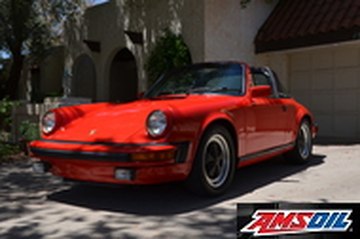
Catalog vehicle photograph for 1982 Porsche 911
Vehicle photograph from our catalog. Appearance may differ by model or trim.
Visit us on social media